-
-
-
White Square, Hinjawadi,Pune 411057
Welcome to Our Micraft Solutions
Please fill out the form below and we will get back to you as soon as possible.

Contrary to popular belief, Lorem Ipsum is not simply random text. It has roots in a piece of classical Latin literature from 45 BC, making it over 2000 years old.

19
Jul
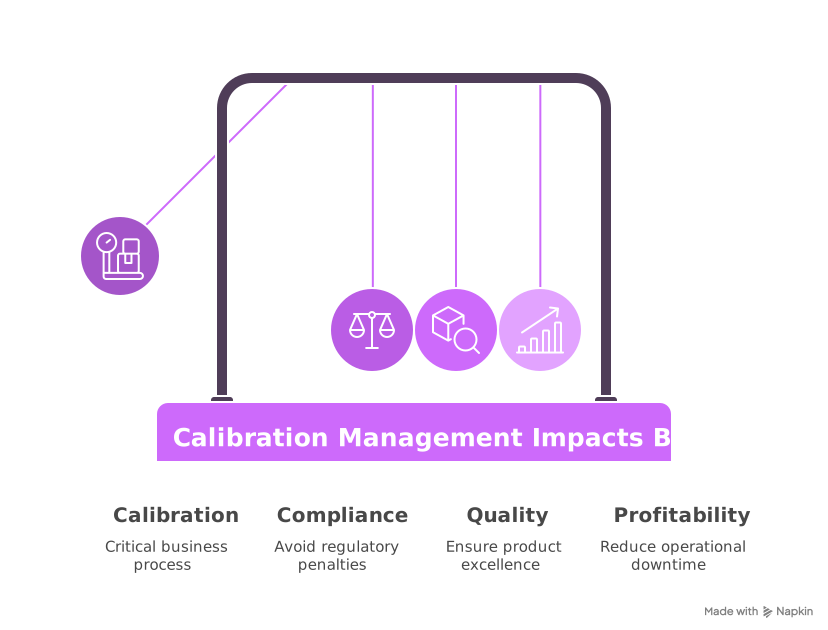
Calibration management isn’t just a technical formality—it’s a business-critical process that directly impacts compliance, product quality, and profitability. Yet many organizations unknowingly fall into traps that lead to regulatory penalties, customer complaints, or operational downtime.
Here are five common mistakes and how you can avoid them:
Manual tracking increases the risk of lost data, version confusion, and missed calibrations.
Avoid it with: A centralized, cloud-based system like PrecisionCal that automates data entry and reminders.
Over-calibration wastes time and money; under-calibration risks non-compliance.
Avoid it with: Usage-based or risk-based scheduling, supported by analytics.
In audits or root cause investigations, incomplete records can be devastating.
Avoid it with: PrecisionCal’s built-in audit trails and digital certificates.
Multi-location operations often face discrepancies in processes and documentation.
Avoid it with: Multi-site dashboards and standardized workflows.
Without analytics, recurring failures or drift issues go unnoticed.
Avoid it with: Automated trend reports and MSA tools.







Stay updated with the newest articles, regulatory changes,
and expert advice from the PrecisionCal team.